.jpg)
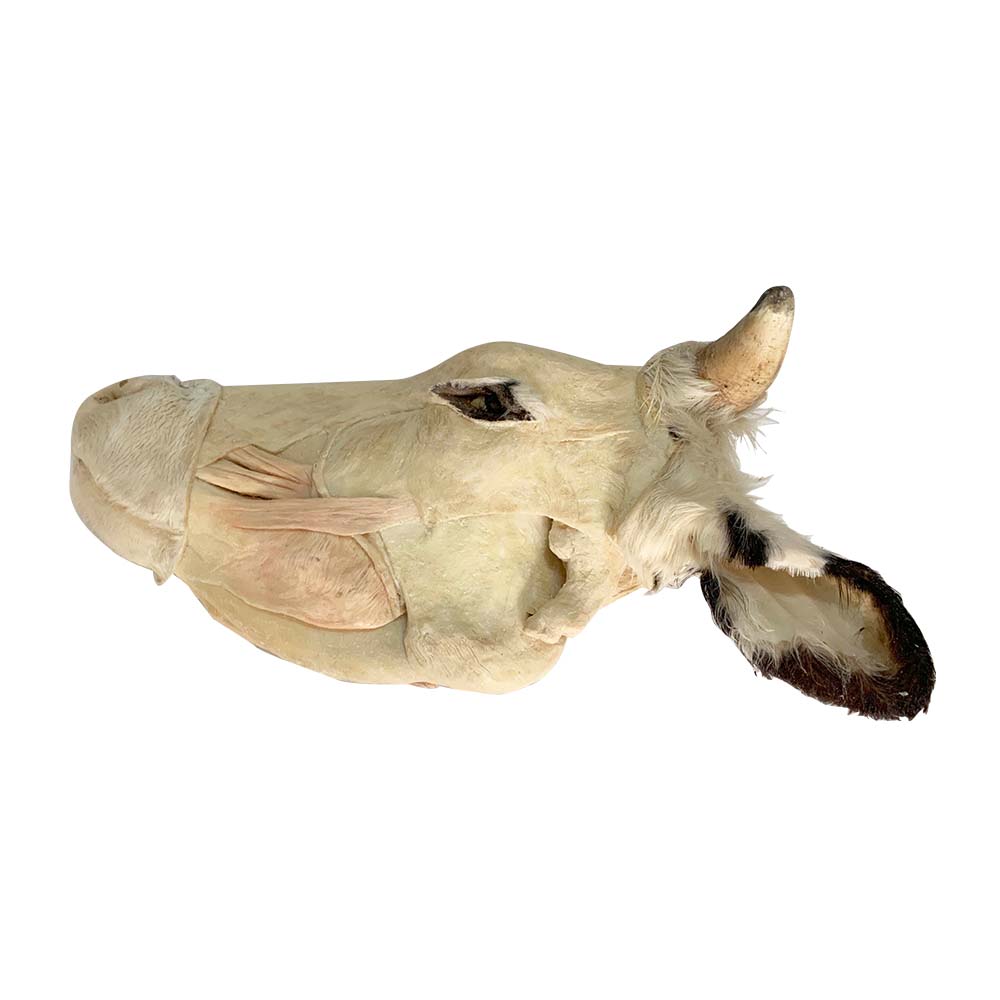
Platinated animal specimens are structurally complete and realistic, meeting core teaching requirements. They fully preserve the morphology and spatial relationships of an animal's (e.g., horse) skeleton, muscles, nerves, blood vessels, and internal organs, clearly presenting the adjacent relationships of various tissues. They can visually demonstrate detailed structures such as superficial muscles and deep nerves, helping students quickly understand animal physiology, biomechanical characteristics, and circulatory pathways, compensating for the abstract nature of theoretical teaching.
Platinated animal specimens are dry, odorless, and stable, requiring no special preservatives. Students can repeatedly touch, observe, and even simulate dissection procedures without worrying about damage or deterioration. This makes them particularly suitable for grassroots veterinary technology extension training and anatomical practical teaching, enhancing students' hands-on skills and knowledge application abilities.
Plastinated animal specimens avoid the hazards of irritating volatile substances associated with traditional formalin specimens, providing a safer operating environment. Teaching can be conducted without special protective measures, reducing the impact on the health of teachers and students. They are suitable for long-term, high-frequency classroom teaching and practical training. They can be preserved for extended periods without frequent specimen replacement and can be reused for multiple batches of teaching. This also reduces the number of experimental animals used in research and teaching, aligning with animal protection principles and lowering the cost of teaching materials.