
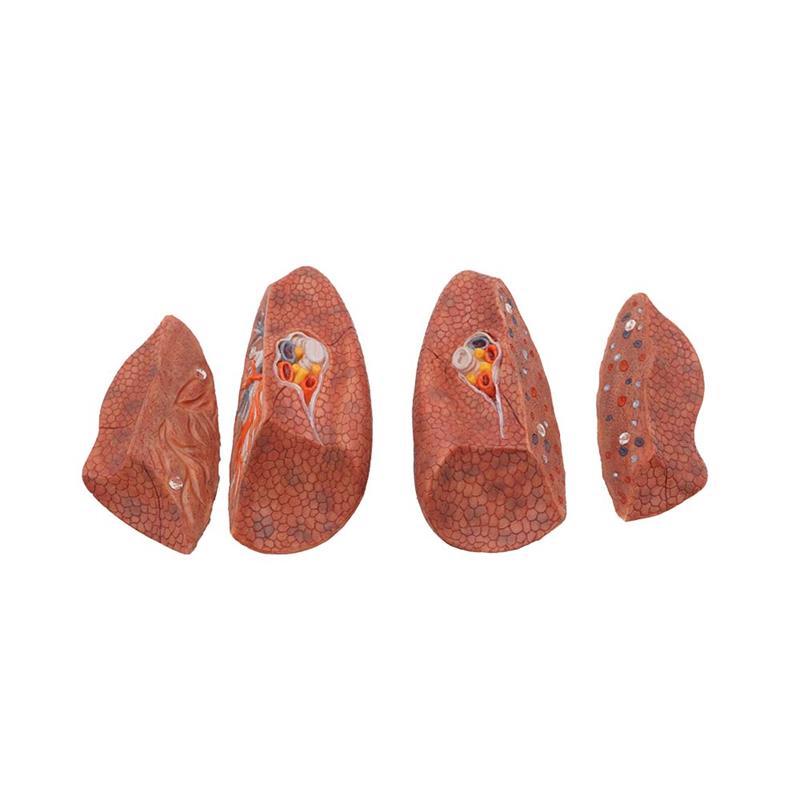
Learning anatomy requires mastering major branches such as systemic anatomy (describing human structures according to organ systems) and regional anatomy (focusing on specific areas). It is recommended to start with systemic anatomy to establish a holistic concept, then delve into local details, while combining this with microscopic observations such as histology to form a complete understanding from macroscopic to microscopic levels. Modern anatomy teaching emphasizes building a bridge between cadavers and living organisms and incorporating imaging content such as X-ray anatomy to better serve clinical practice.
The study of anatomy requires establishing four basic viewpoints: the viewpoint of the evolutionary development of morphological structures, the viewpoint of the interrelationship between the organism and its environment, the viewpoint of the interrelationship between organ structures, and the viewpoint of the unity of opposites between form and function. The human body can be divided into ten major parts, including the head, neck, trunk, and limbs, each containing smaller anatomical structures.
Anatomy is the source of more than one-third of the terminology in medicine, highlighting its importance. Through the study of anatomy, students not only acquire knowledge of human morphology and structure but also cultivate scientific thinking and independent working abilities, laying a solid foundation for their future medical careers.
Meiwo provides soft silicone anatomy models, high simulation silicone anatomy models, highly realistic anatomy models, silicone pathological specimens, animal plastinated specimens for medical education.
Meiwo provides soft silicone anatomy models, high simulation silicone anatomy models, highly realistic anatomy models, silicone pathological specimens, animal plastinated specimens for medical education.

