
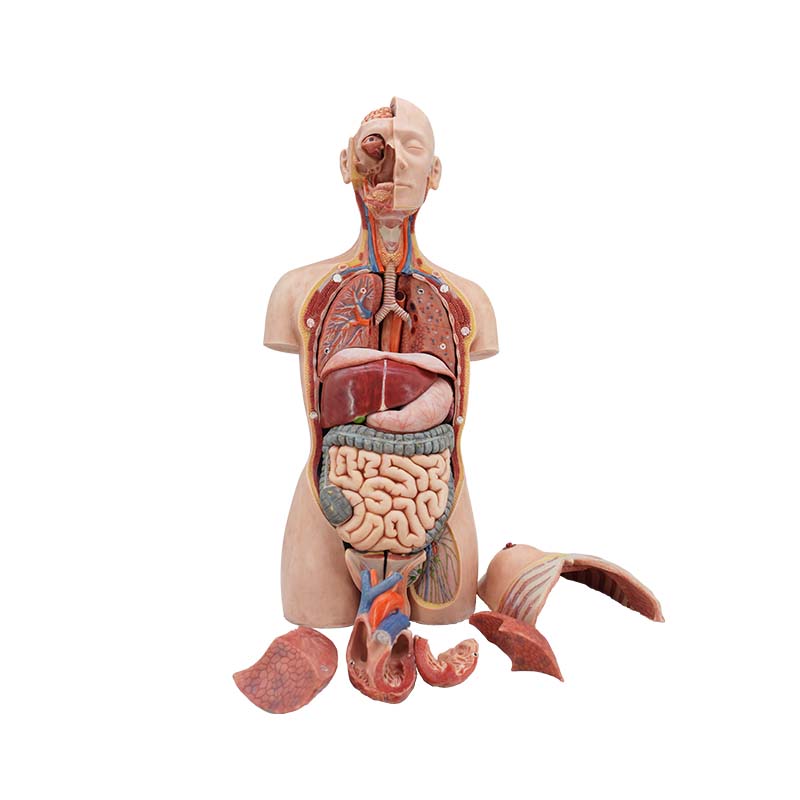
Before use, first check the model's integrity, ensuring all components are undamaged or missing, especially detachable organs or joints.
Clean your hands and wear gloves before handling to avoid contaminating the model surface; select an appropriate model based on the teaching type (e.g., skeletal, muscular, or regional anatomy).
Operate in a dry, dark environment, away from high temperatures or humidity to prevent material aging.
When using anatomical models, pay attention to the following operating steps:
Observation and Disassembly: Start with the overall structure and gradually disassemble separable components (e.g., liver, muscle layers). Pay attention to the snap-fit or magnetic design at joints to avoid excessive force that could cause breakage.
Tool Assistance: When using dissecting needles or forceps, gently touch detailed areas (e.g., nerve and blood vessel branches) to reduce the risk of scratches; use a dissecting microscope to observe fine structures and improve learning accuracy.
Interactive Learning: Models demonstrate organ surface projections or nerve pathways, enhancing clinical relevance. In artistic creation, pay attention to proportional harmony and avoid stiff, unnatural movements.
After use, anatomical models require careful assembly and repositioning. Reassemble components in reverse order of disassembly, ensuring all snaps are fully closed. Check the flexibility of movable joints (e.g., knee joints). After assembly, gently wipe away dust with a soft cloth. For stubborn stains, use a neutral detergent for local cleaning. Do not use alcohol or strong acid/alkali solvents, as these can corrode the coating.
Anatomical models should be stored in a cool, dark place with 40%–60% humidity to prevent dust accumulation. Resin or silicone models should be kept away from direct UV light to prevent fading. Regularly clean with warm water and a neutral detergent, rinsing thoroughly and drying completely. Fingerprints or oil stains can be removed with a cotton swab dipped in a small amount of water.
Meiwo silicone anatomical models are highly flexible and can be repeatedly bent, but should be protected from chemical solvents.
.jpg)

